Il CNR – Istituto di Ricerca su Innovazione e Servizi per lo Sviluppo ai fini della realizzazione del ProgettoErasmus+“Education in Living Labs: Participatory Skills for sustainable Urban Governance – PS-U-GO”, KA220-HED -Cooperation partnerships in higher education, Call 2023, project code: 2023-1-CY01-KA220-HED-000158284,di cui il CNR-IRISS coordina l’unità napoletana con Grant Agreement del 12/02/2024, CUP B73C24000650006, intende avvalersi della collaborazione di un esperto di elevata professionalità per lo svolgimento della seguente attività: Fornitura video con uscite esterne e montaggio di un mini-documentario.
Competenze richieste:
- Competenze in videomaking, videoediting, sceneggiatura, ricerca sociale
- Conoscenza delle lingue: inglese
Requisiti del collaboratore:
- deve avere una documentata esperienza nella progettazione e produzione di documentari scientifici, in particolare documentari che esplorano questioni sociali rilevanti in cui i comitati sociali hanno un ruolo determinante per le scelte politiche e le trasformazioni urbane e sociali.
Allegati
Bando
Nomina Commissione
Provvedimento conferimento incarico
November 3rd, 2025
The Cnr Iriss (Institute for Research on Innovation and Services for Development of the National Research Council of Italy) will take part in the 7th SWITCH-Asia Annual Meeting, dedicated to the theme “Scaling Up the Circular Economy in Asia: Bridging Policy, Practice, and Investments through the EU Global Gateway.”
Organised by the European Commission under the SWITCH-Asia Programme, the event brings together policymakers, businesses, development partners, and civil society to foster the transition towards sustainable circular economy models across Asia.
During the meeting, Cnr Iriss will present the results of the 3R4UB – Reduce, Reuse, Recycle for Ulaanbaatar project, funded by the European Union within the SWITCH-Asia framework. Implemented in collaboration with Ulaanbaatar City Municipality, Metellia Servizi, and other Italian and Mongolian partners, the project has developed a Masterplan for sustainable urban waste management and established a pilot sorting and recycling plant to support the circular transition of Mongolia’s capital city.
The participation in the Bangkok meeting, which includes sessions on circular economy policies, green investments, and best practices in the agri-food, construction, and tourism sectors, represents an important opportunity to strengthen dialogue between Europe and Asia within the EU Global Gateway framework.
By sharing the experience of Ulaanbaatar, Cnr Iriss contributes to promoting technical cooperation and knowledge exchange on urban sustainability, offering a replicable model for the development of resilient, inclusive, and low-emission cities across Asia.
Organizzato da:
CNR – Istituto di Ricerca su Innovazione e Servizi per lo Sviluppo
Referente organizzativo:
Gabriella Esposito
CNR – Istituto di Ricerca su Innovazione e Servizi per lo Sviluppo
gabriella.espoito@cnr.it
Modalità di accesso: ingresso libero
Vedi anche:
November 2nd, 2025
The Fiji Blue Fishing Project officially launched with a two-day event in Suva on October 23–24, marking the start of an EU-funded initiative to strengthen sustainable fisheries and circular economy value chains in Fiji. The project is coordinated by the Institute for Research on Innovation and Services for Development of the National Research Council of Italy (Cnr-Iriss) and funded by the European Union SWITCH-Asia Programme under the EU Global Gateway strategy, with a total budget of EUR 1.87 million.
Developed with a strong international partnership — including LMMA Network International Trust (Fiji), AMP Punta Campanella, Metellia Servizi, and Nuova Ulixes Cooperative (Italy) — Fiji Blue Fishing is the first and only EU SWITCH-Asia project in the Pacific region, a milestone for regional cooperation and a tangible contribution to the European Green Deal priorities.The project aims to make Fiji’s fisheries and agri-food value chains more sustainable and resilient, improving livelihoods and fostering inclusive growth. It supports fishing communities in adopting sustainable practices, enhancing product quality, and accessing new markets and value-added opportunities for long-term economic and environmental sustainability.
Serving as a national platform, the Kick-off presented the project’s goals for sustainable fisheries, food security, and marine conservation, fostering collaboration among institutions, communities, and development partners. The first day included the initial Steering Committee meeting, attended by representatives of all partner organisations to discuss progress and plan next steps. Ms. Kim Edou (European Commission, Ocean Programme Manager) joined the session and praised the collaborative approach of the partners and the project’s potential to drive sustainable innovation in the Pacific.
The official launch, held on 24 October under the title “Transforming Fiji’s Fisheries and Agri-Food Value Chain (2025–2028)”, brought together government institutions, local communities, and international partners to outline objectives and explore opportunities for collaboration. The event saw the participation of the European Union Ambassador to the Pacific, Barbara Plinkert; the Minister for Fisheries and Forests, Hon. Alitia Bainivalu; the Minister for Environment and Climate Change, Hon. Mosese Bulitavu; and the Minister for iTaukei Affairs, Hon. Ifereimi Vasu, alongside representatives of the EU Delegation for the Pacific, development partners, and research institutions.
During the launch ceremony, a Memorandum of Understanding was signed between project partners and government institutions, reaffirming their commitment to sustainable fisheries and community-based innovation. The event also included thematic sessions and a panel discussion on “The Challenges and Opportunities for Implementing the Circular Economy”, which addressed key issues such as marine pollution, post-harvest losses, and the role of solar-powered ice plants in improving the fisheries cold chain and community resilience.
A breakout group on “Co-Design Pathways for Resilient Communities with Circular Economy” provided a participatory space for stakeholders — including fisher associations, community representatives, and market actors — to share ideas on strengthening resilience, market access, and value-chain opportunities. As part of its awareness and capacity-building strategy, the project will also develop training activities, outreach campaigns, and technical missions to support fishermen’s associations, promote eco-packaging and plastic recovery solutions, and facilitate access to green finance for small and medium enterprises.
The mission and the launch event highlighted the project’s strong collaborative spirit and scientific vision. “The enthusiasm and participation of local communities and institutions confirm that the conditions are in place for excellent collaboration,” said Dr. Massimo Gacci, General Director of Open Plan Consulting, working on the project and participating in the scientific mission in Suva from 18 to 24 October, together with Manrico Benelli (Assignments Management & Accounting, Open Plan Consulting). “The project represents an important step in linking research, innovation, and community-based action to protect the ocean while creating new economic opportunities.”
“Fiji Blue Fishing stands as a meaningful step in strengthening cooperation between Europe and the Pacific for sustainable development,” commented Dr. Gabriella Esposito, Senior Researcher at Cnr-Iriss and Scientific Coordinator of the project. “By combining scientific knowledge, local engagement, and innovative circular economy solutions, we aim to create lasting value for communities, ecosystems, and markets alike.”
Per informazioni:
Gabriella Esposito
CNR – Istituto di Ricerca su Innovazione e Servizi per lo Sviluppo
gabriella.esposito@cnr.it
Vedi anche:
November 2nd, 2025

The relationship between conflict and peace, understood as a constitutive tension of urban life, and the role of the commons as practices of coexistence, care, and transformation of the city are at the core of the reflection developed in the special issue Urban Conflicts and Peace: Everyday Politics of Commons, edited by Stefania Ragozino (Cnr Iriss), Tihomir Viderman (BTU Cottbus–Senftenberg), and Chiara Belingardi (Cnr Istc and LaPEI – University of Florence).
Published in Tracce Urbane – Rivista Transdisciplinare di Studi Urbani, an online journal by Sapienza University of Rome, this issue investigates the political, spatial, and affective implications of this tension, offering an in-depth exploration of the commons as everyday practices of negotiation, care, and coexistence. The aim is to move beyond the dichotomy between conflict and peace, interpreting them as intertwined forces shaping urban space and fostering forms of justice and solidarity.
The collected contributions highlight a transdisciplinary perspective that brings together theory and practice, interweaving references to urban critique, feminist thought, and postcolonial studies (Lefebvre, Federici, Mouffe, Butler). Here commons are interpreted not only as alternative modes of resource management but also as relational and political processes through which diverse communities construct and experiment with practices of spatial justice and solidarity, thus becoming spaces of political experimentation and cooperation.
The publication stems from the research and dialogue initiated with the international conference Urban Conflicts and Peace: Everyday Politics of Commons, held in 2023 and organized by the AESOP Thematic Group on Public Spaces and Urban Cultures and Cnr Iriss, in collaboration with the Brandenburg University of Technology Cottbus–Senftenberg, the Laboratory of Ecological Design of Settlements (LaPEI) at the University of Florence, the Department of Architecture at the University of Naples Federico II, Lido Pola Common, and the Government Commissioner Structure for the environmental remediation and urban regeneration of the Bagnoli-Coroglio National Interest Site.
The issue brings together the outcomes and developments of that dialogue, combining theoretical approaches and case studies from various European and international contexts. Among the contributions are a dialogue with Jonathan Metzger (KTH Royal Institute of Technology) and Stavros Stavrides (School of Architecture, National Technical University of Athens) on the political meanings of commoning, and a photographic portfolio titled Naples: Continuity and Discontinuity, curated by Tihomir Viderman and Stefania Ragozino.
October 28th, 2025

C’è tempo fino al 17 dicembre 2025 per presentare la domanda di ammissione al Master Universitario di II livello “Città di Genere. Metodi e tecniche di pianificazione e progettazione urbana e territoriale”.
Promosso dall’Università di Firenze in collaborazione con Cnr-Iriss, Politecnico di Bari, Università degli Studi di Napoli Federico II, Sapienza Università di Roma, Università degli Studi di Palermo e Università di Trieste, il Master prenderà avvio a febbraio 2026. Il percorso formativo mira a preparare professioniste e professionisti capaci di applicare l’approccio di genere in tutti gli ambiti della progettazione, della pianificazione e delle politiche urbane e territoriali, operando nei settori della ricerca, della pubblica amministrazione e della libera professione.
La didattica affronta la città e il territorio da una prospettiva sempre più riconosciuta a livello nazionale e internazionale, proponendo un approccio transcalare e transdisciplinare che va dalla dimensione abitativa a quella territoriale e delle politiche pubbliche. Il corso offre strumenti di analisi e interpretazione dei contesti dell’abitare, valorizzando le istanze e le esperienze delle persone e delle comunità. Attraverso lezioni, seminari e incontri con esperte ed esperti, verranno presentate teorie, visioni e proposte progettuali che saranno poi sperimentate nelle attività laboratoriali, dove idee e soluzioni verranno messe alla prova nei diversi contesti di ricerca e professionali.
Il Cnr-Iriss contribuisce alle attività del Master con le ricercatrici Gabriella Esposito e Stefania Ragozino, componenti del Comitato Scientifico e responsabili scientifiche del modulo didattico “La cura come elemento fondativo delle tematiche spaziali”. Il modulo è dedicato alla cura come principio conoscitivo e progettuale nelle questioni urbane e territoriali e come elemento generativo dello spazio quotidiano, interpretato anche attraverso l’esperienza femminile.
Le attività didattiche inizieranno il 27–28 febbraio 2026 con un seminario internazionale. La didattica sarà erogata in modalità duale, con parte delle attività in e-learning. Le lezioni si terranno il venerdì pomeriggio (14.30–18.30) e il sabato (9.30–18.00). Sarà quindi possibile seguire il corso interamente a distanza, salvo la giornata degli esami di profitto e la discussione delle tesi. Sono previste borse di studio. La partecipazione al Master riconosce 30 CFP OAPPC. Il Master è incluso nell’offerta formativa PA110eLode.
Date importanti
Scadenza invio domande di ammissione: 17 dicembre 2025
Pubblicazione graduatoria delle persone ammesse: 9 gennaio 2026
Scadenza iscrizioni: 23 gennaio 2026
Per maggiori informazioni, si invita a scrivere una mail al seguente indirizzo: master_pianificazione_genere@dida.unifi.it
Per informazioni:
Gabriella Esposito
CNR – Istituto di Ricerca su Innovazione e Servizi per lo Sviluppo
gabriella.esposito@cnr.it
Vedi anche:
October 21st, 2025
Il CNR – Istituto di Ricerca su Innovazione e Servizi per lo Sviluppo ai fini della realizzazione del Progetto PNRR PE00000014 “SEcurity and RIghts in the CyberSpace (SERICS) PRR.AP020.002 – PE_SERICS_Spok e_1_IIT – Partenariato esteso 07: Cybersecurity, nuove tecnologie e tutela dei diritti”, Codice CUP: B53C22003950001, intende avvalersi della collaborazione di un esperto di elevata professionalità per lo svolgimento della seguente attività: Studio e sviluppo di soluzioni di usage control e data soveregnty per l’osservatorio per la cyber security e i cyber rights.
Competenze richieste:
• Competenze sulla sicurezza informatica, sulle tecnologie di data usage control e data sovereignty, esperienza di studio e sviluppo su osservatori per la cyber security, competenze in tecnologie informatiche e di virtualizzazione.
• Requisiti del collaboratore:
• Diploma di laurea conseguito secondo la normativa in vigore anteriormente al D.M. 509/99, oppure della Laurea Specialistica/Magistrale (D.M. 5 maggio 2004)
• Alta competenza in servizi informatici
• Esperienza pregressa in materia di sicurezza informatica, sulle tecnologie di data usage control e data sovereignty, esperienza di studio e sviluppo su osservatori per la cyber security, competenze in tecnologie informatiche e di virtualizzazione
• Conoscenza della lingua inglese
Allegati
Bando
Nomina Commissione
Provvedimento conferimento incarico
October 20th, 2025

The Institute for Research on Innovation and Services for Development (Cnr-Iriss), as partner of RETE – International Association for the Collaboration between Ports and Cities, is pleased to promote the 2025 Calls for Papers launched by PORTUSplus, the open-access and peer-reviewed journal published by RETE.
PORTUSplus promotes multidisciplinary research and international debate on the complex relationships between ports, cities, and waterfronts, combining perspectives from urban planning, geography, engineering, architecture, social sciences, economics, and cultural studies. The journal aims to foster dialogue between academia, professionals, and policymakers on sustainable and inclusive port-city development.
The Special Issue 2025 “Waterway Port Cities. Navigating Challenges and Harnessing Potentials”, guest edited by Carola Hein (TU Delft) and Oriana Giovinazzi (IUAV), focuses on waterway port cities as key nodes of global trade, cultural exchange, and regional development. Positioned at the interface between land and water, these cities face both opportunities and challenges in the context of the green and digital transitions. The call invites contributions exploring the economic, cultural, and social roles of waterway port cities; environmental sustainability and green infrastructure; synchro-modality and innovation in transport systems; the role of ports in the energy transition and in building climate resilience; governance models and collaborative practices; and socio-economic impacts on local communities and waterfront redevelopment.
The Call for Papers 2025 “Research Themes” welcomes articles addressing the wide range of topics that define port-city studies, including the evolution and history of port cities, economic and business dimensions, urban-port governance, architecture and landscape, environmental sustainability, culture and identity, and communication strategies. The 2025 “Research Themes” issue continues the Journal’s tradition of exploring the multifaceted dynamics that shape contemporary port cities and urban waterfronts—examining how they evolve, regenerate, and innovate in response to social, cultural, environmental, and technological challenges.
Both calls invite international scholars, practitioners, and policymakers to contribute original works, case studies, and good practices that enrich the global dialogue on sustainable, resilient, and people-centered port cities.
Per informazioni:
Oriana Giovinazzi
oriana.giovinazzi@portusonline.org
Vedi anche:
October 13th, 2025
24/09/2025
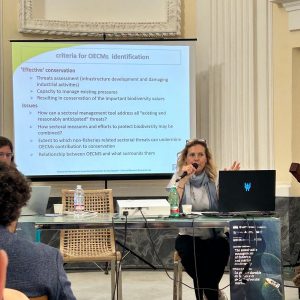
Dal 11 al 13 settembre, sull’isola di Procida, nel golfo di Napoli, si è tenuto un evento internazionale sulla gestione sostenibile delle risorse biologiche marine e la tutela della biodiversità marina, che ha visto la partecipazione della Commissione Generale per la Pesca nel Mediterraneo (CGPM) della FAO (Food and Agriculture Organization of the United Nations), dell’Università di Napoli L’Orientale, dell’AssIDMer e del Cnr.
La Conferenza, dal titolo “The sustainable management of fisheries and marine biodiversity”, è stata organizzata dalla Association Internationale du Droit de la Mer – AssIDmer con il sostegno della CGPM – FAO e ha riunito studiosi di diritto internazionale, scienziati marini, responsabili politici e parti interessate regionali per affrontare le sfide urgenti nella gestione delle risorse marine nel Mediterraneo e in alto mare.
Finanziata dal Global Environment Facility, l’iniziativa ha rappresentato un importante momento di confronto, di rilievo internazionale, incentrato sulla governance sostenibile della pesca e la protezione della biodiversità marina.
Tra i relatori, la dottoressa Valentina Rossi, Prima ricercatrice di diritto internazionale del Cnr Iriss, che ha affrontato il tema dei nuovi strumenti di natura spaziale (cd. “area-based management tools”) per la tutela della biodiversità marina e la gestione sostenibile delle risorse biologiche marine. La dottoressa Valentina Rossi ha approfondito questa tematica nell’ambito del Progetto PNRR per la creazione del “National Biodiversity Future Center”, Spoke 2 “Solutions to reverse marine biodiversity loss and manage marine resources sustainably”.
La Conferenza si è svolta nel contesto della manifestazione “Maretica”, un festival ideato da Alessandro Baricco che porta a Procida giornate di cultura e sport dedicate al mare, con l’idea di “ripensare l’umanità a partire dal mare”. Giunto alla sua ottava edizione, il festival “Maretica 2025” ha incluso, oltre al Convegno sul diritto del mare, una mostra fotografica, la proiezione di un docufilm, un concerto.
Nell’ambito della manifestazione, inoltre, è assegnato il premio ad un individuo, collettivo, istituzione o associazione che si sia distinta/o nel mettere a fuoco la portata etico-politica delle attività culturali, economiche, e sociali legate ogni dove all’elemento mare. Quest’anno è stata premiata l’ONG Mediterranea Saving Humans, l’unica organizzazione (italiana) ad avere una nave battente bandiera italiana (la Mare Jonio) che opera nel Mare Mediterraneo per soccorrere i tanti che nel tentativo di fuggire da guerre, siccità, e disperazione nei loro paesi d’origine vengono a contatto con il nostro mare attraverso il naufragio, e il rischio di morte.
Per informazioni:
Valentina Rossi
CNR – Istituto di Ricerca su Innovazione e Servizi per lo Sviluppo
valentina.rossi@cnr.it
Vedi anche:
October 1st, 2025
From 17 to 19 September 2026, Vienna will host the third edition of the international conference Groove the City – Move the Streets, promoted by the Urban Music Studies Scholars’ Network in collaboration with the Thematic Group for Public Spaces and Urban Cultures (AESOP TG PSUC).
The initiative brings together scholars, researchers, artists, and activists to explore the relationship between music and the city, with a special emphasis on the street as symbolic, cultural, and political space. Streets can be sites of performance, protest, encounter, and transformation, where music becomes a vehicle of belonging, resistance, and solidarity.
The conference welcomes contributions on topics spanning musical practices in public spaces, street and urban cultures, the role of music in protest, urban soundscapes, and how music can foster inclusion, participation, and innovation in contemporary cities.
The deadline for submitting abstracts (max 300 words) is 5 October 2025. Proposals should be submitted via the ConfTool platform and will undergo peer review.
The scientific committee includes internationally recognized experts, among them Gabriella Esposito de Vita, Research Director at CNR IRISS and member of AESOP TG PSUC.
Download the Call for Papers here
More information is available on the official website
September 25th, 2025

Il 18 e 19 settembre 2025 si è svolto ad Atene, presso lo spazio culturale Romantso, il secondo meeting transnazionale del progetto Erasmus+ EMPATHS – EMpowering landscapes with Participatory Approaches to Heritage interpretation Skills.
Il progetto, cui il Cnr Iriss partecipa nell’ambito di una convenzione operativa per attività di ricerca scientifica con il Parco Archeologico dei Campi Flegrei, mira a rafforzare le competenze dei professionisti del patrimonio culturale e sviluppare nuovi profili professionali, capaci di promuovere pratiche partecipative d’interpretazione del patrimonio grazie al coinvolgimento delle comunità locali. Attivando il dialogo tra esperti del patrimonio, comunità e altri stakeholder, il progetto intende stimolare nuove strategie interpretative inclusive che mettano al centro le comunità nella definizione di significati e nell’attribuzione di valore per il proprio patrimonio.
L’incontro di Atene ha riunito i partner europei per fare il punto sui progressi delle diverse linee di lavoro: definizione del curriculum formativo, attività di disseminazione e piano di valutazione. Particolare rilievo ha avuto la sessione dedicata al Work Package 4 – Sperimentazione del programma formativo EMPATHS, coordinato dal Parco Archeologico e incentrato sulla sperimentazione dei programmi di formazione online e degli Interpretive Community Labs in presenza destinati alle varie tipologie di professionisti del patrimonio. Nella sua fase in presenza, la sperimentazione vedrà anche il coinvolgimento attivo delle comunità locali.
Per il Cnr Iriss ha partecipato all’incontro Giuseppe Pace, primo ricercatore dell’Istituto, che insieme a Marzia del Villano, responsabile progetti del Parco Archeologico dei Campi Flegrei, e Filippo Russo, responsabile della comunicazione del Parco, ha presentato gli avanzamenti e i prossimi passi della sperimentazione. L’intervento ha illustrato la metodologia sviluppata per validare i moduli formativi e valutare l’impatto del programma EMPATHS in termini di competenze acquisite e opportunità di coinvolgimento della comunità, con l’obiettivo di creare un modello replicabile oltre la durata del progetto.
Tra i principali risultati attesi figurano un manuale metodologico per i formatori, moduli formativi online destinati a professionisti del patrimonio, linee guida per l’organizzazione degli Interpretive Community Labs e la validazione finale del programma attraverso il feedback di partecipanti e comunità locali.
Il meeting si è concluso con la pianificazione delle prossime attività, che includono workshop formativi e attività pilota in Italia, Austria e Grecia, in vista del terzo incontro transnazionale del progetto programmato nei Campi Flegrei per il 16 e 17 aprile 2026.
Per informazioni:
Giuseppe Pace
CNR – Istituto di Ricerca su Innovazione e Servizi per lo Sviluppo
giuseppe.pace@cnr.it
September 24th, 2025
« Previous Page —
Next Page »